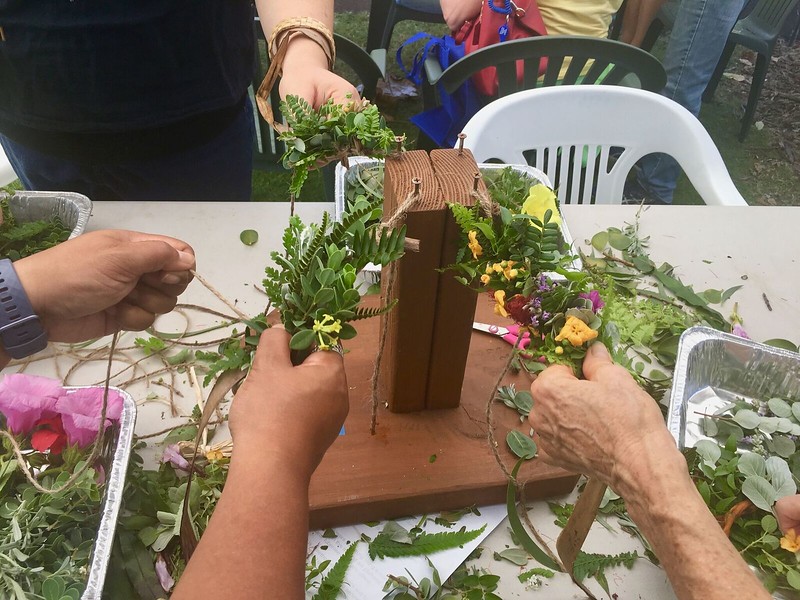
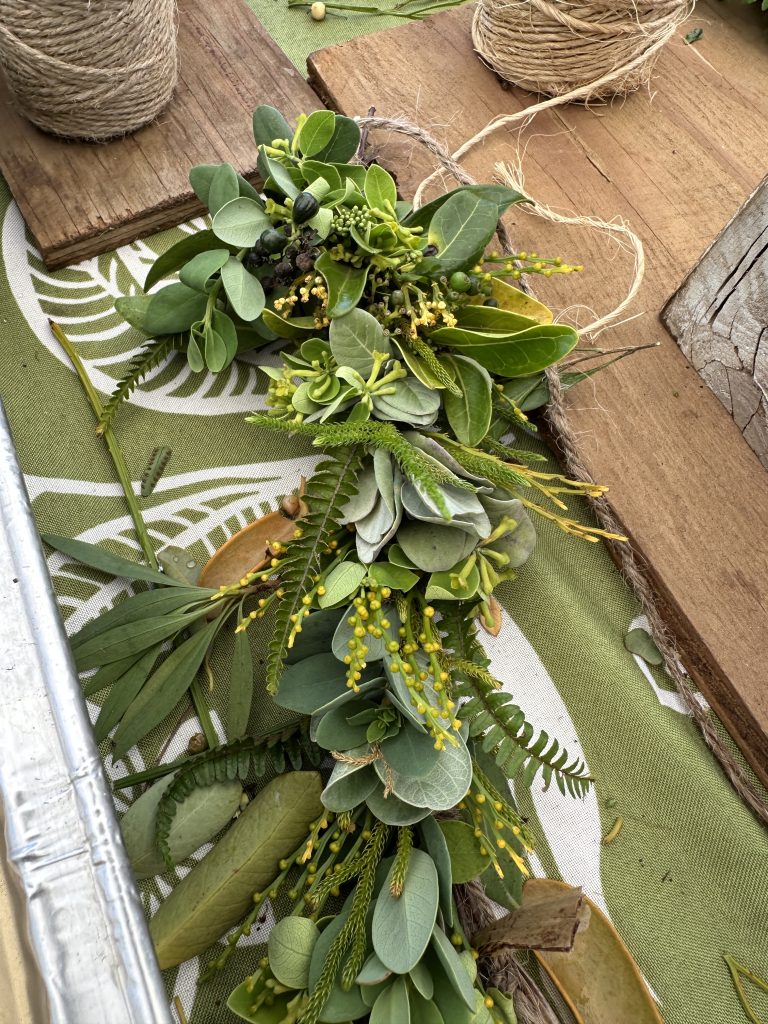
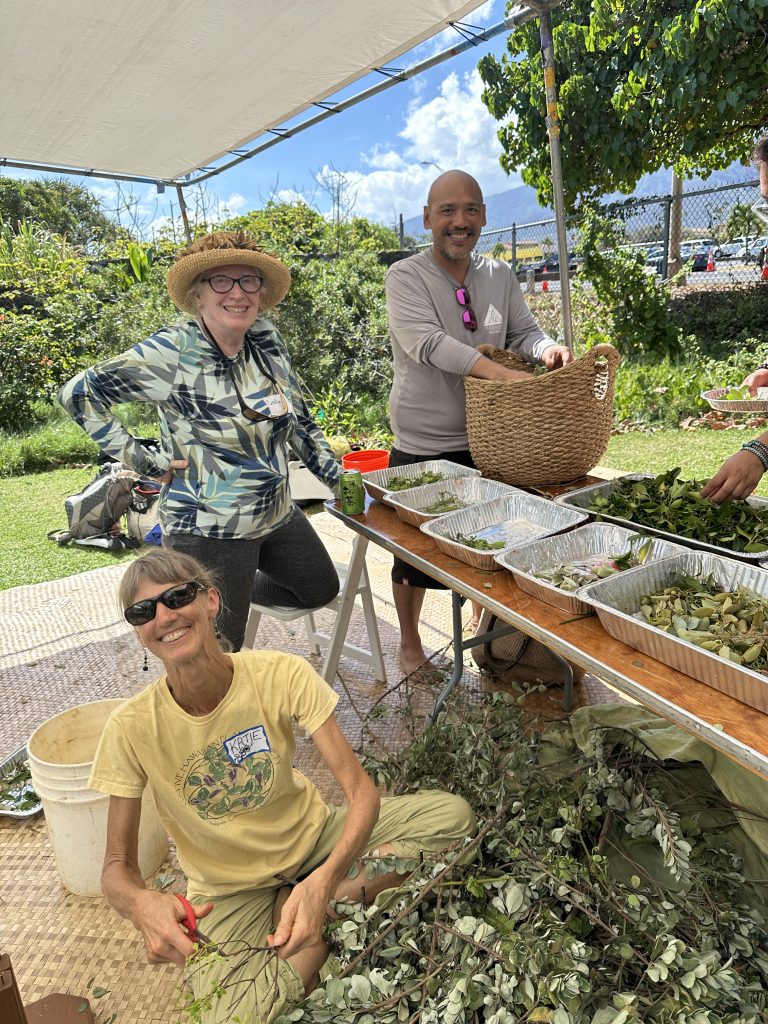
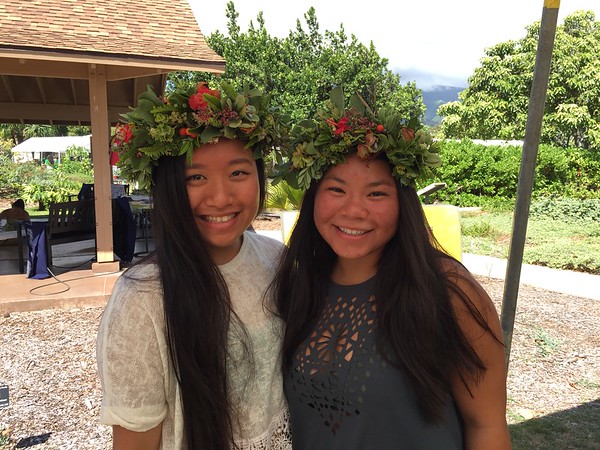
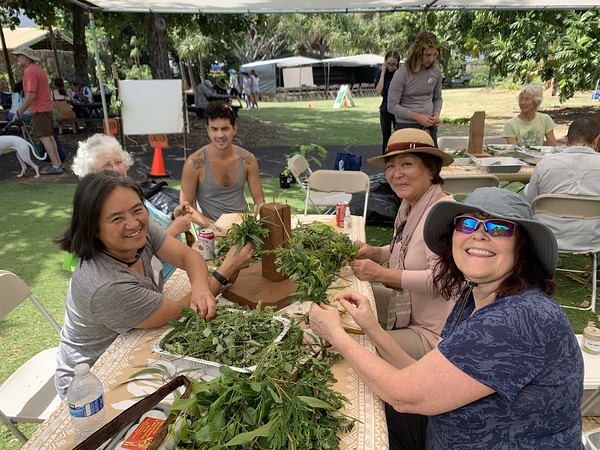
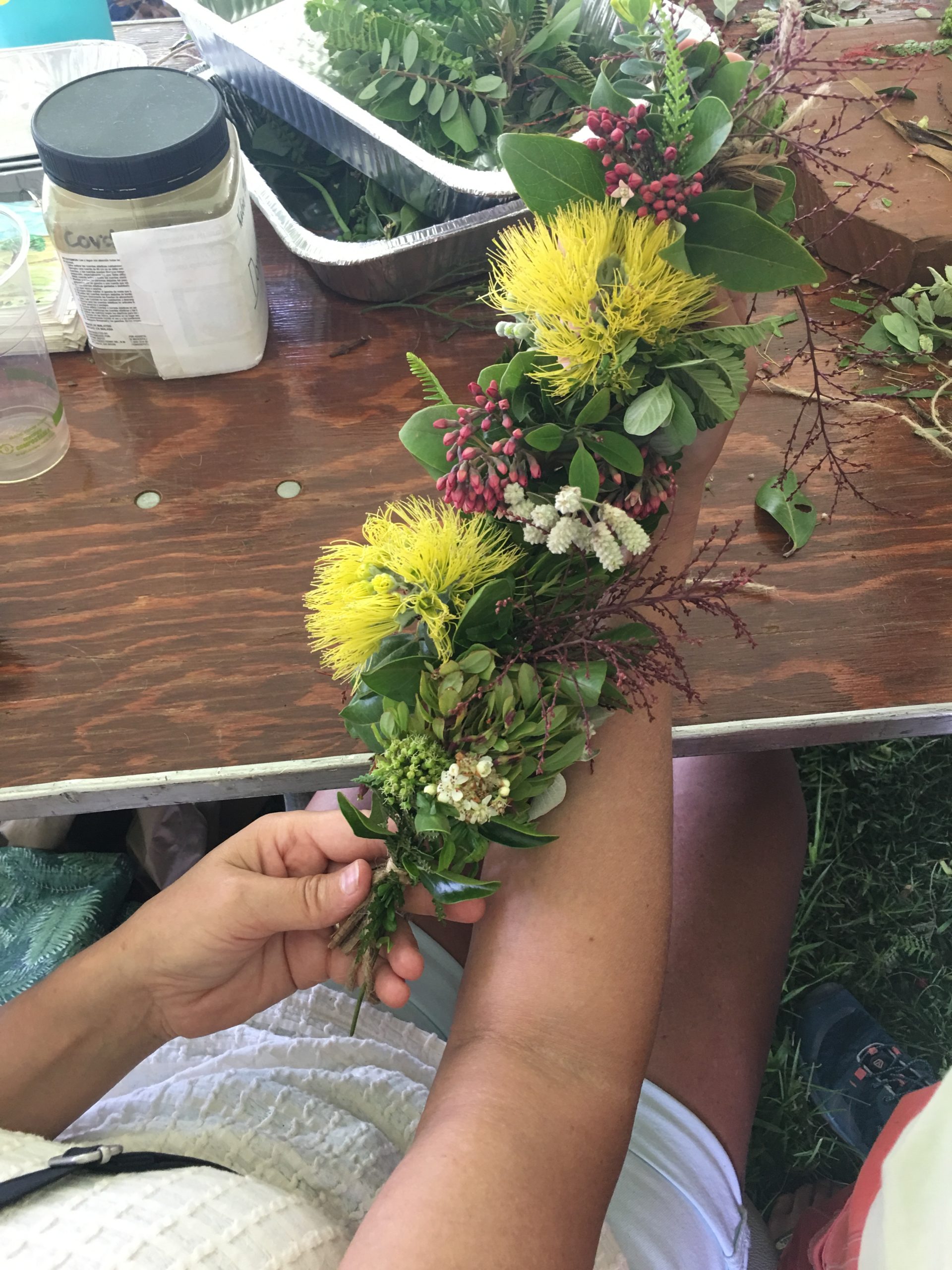
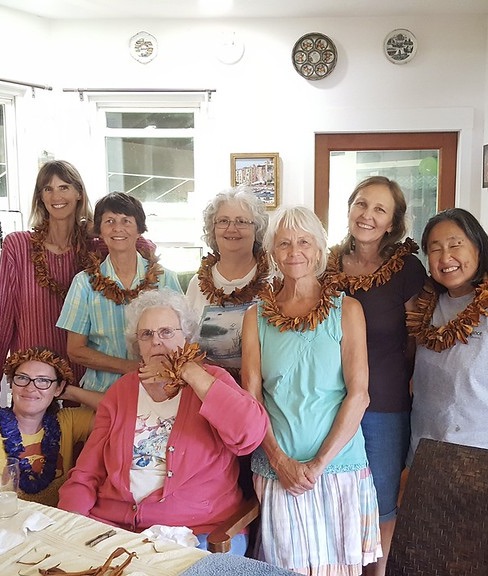
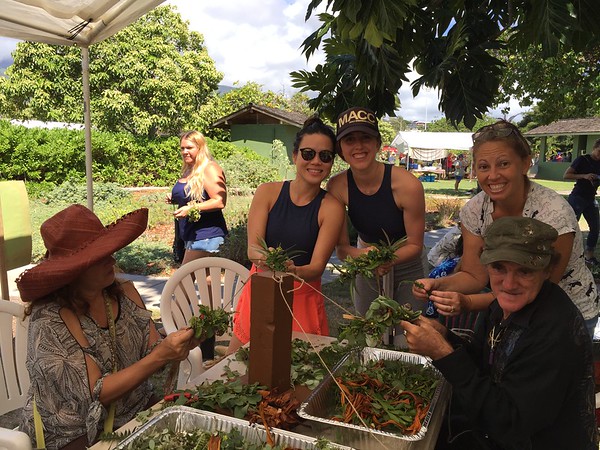
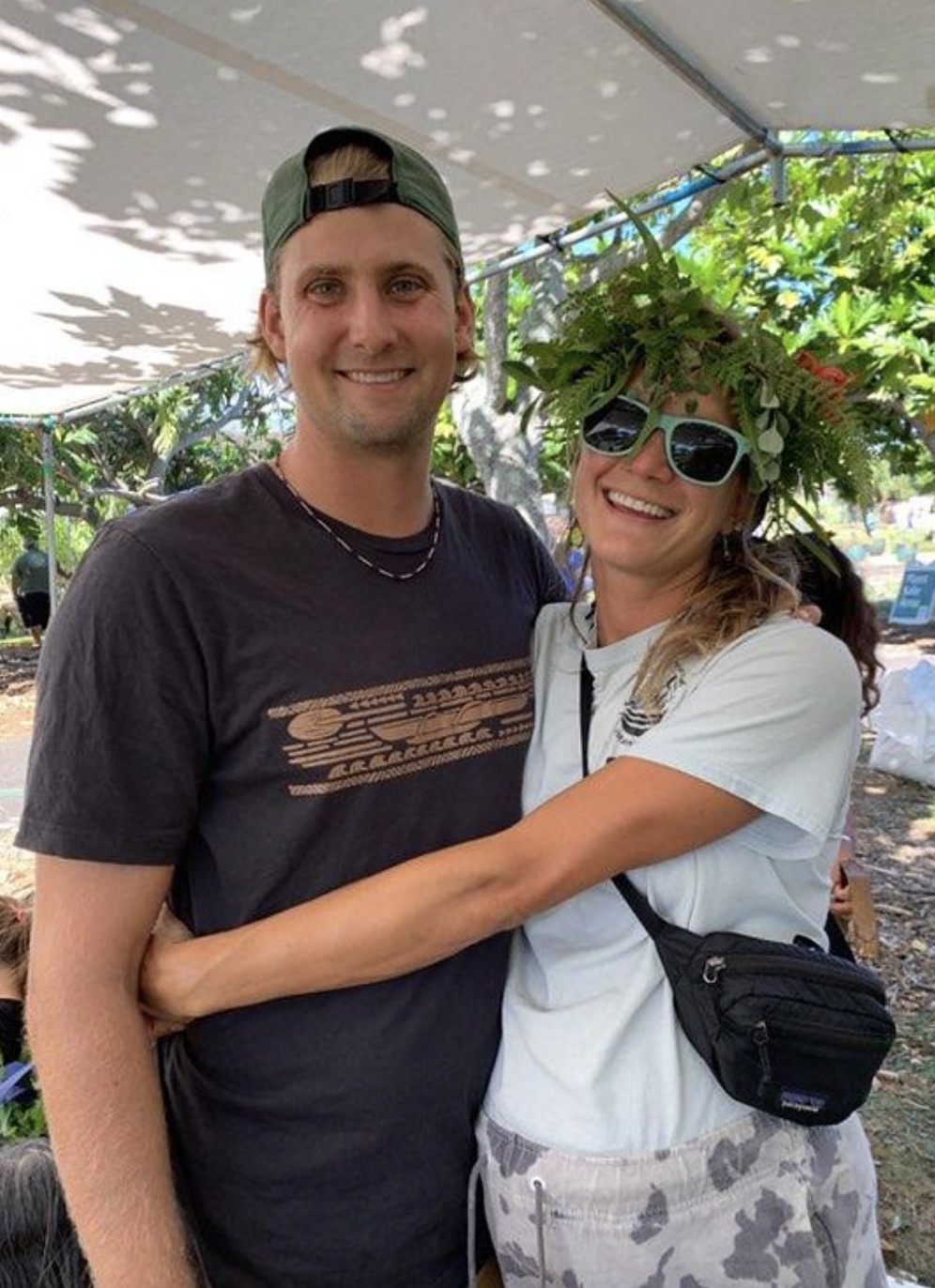
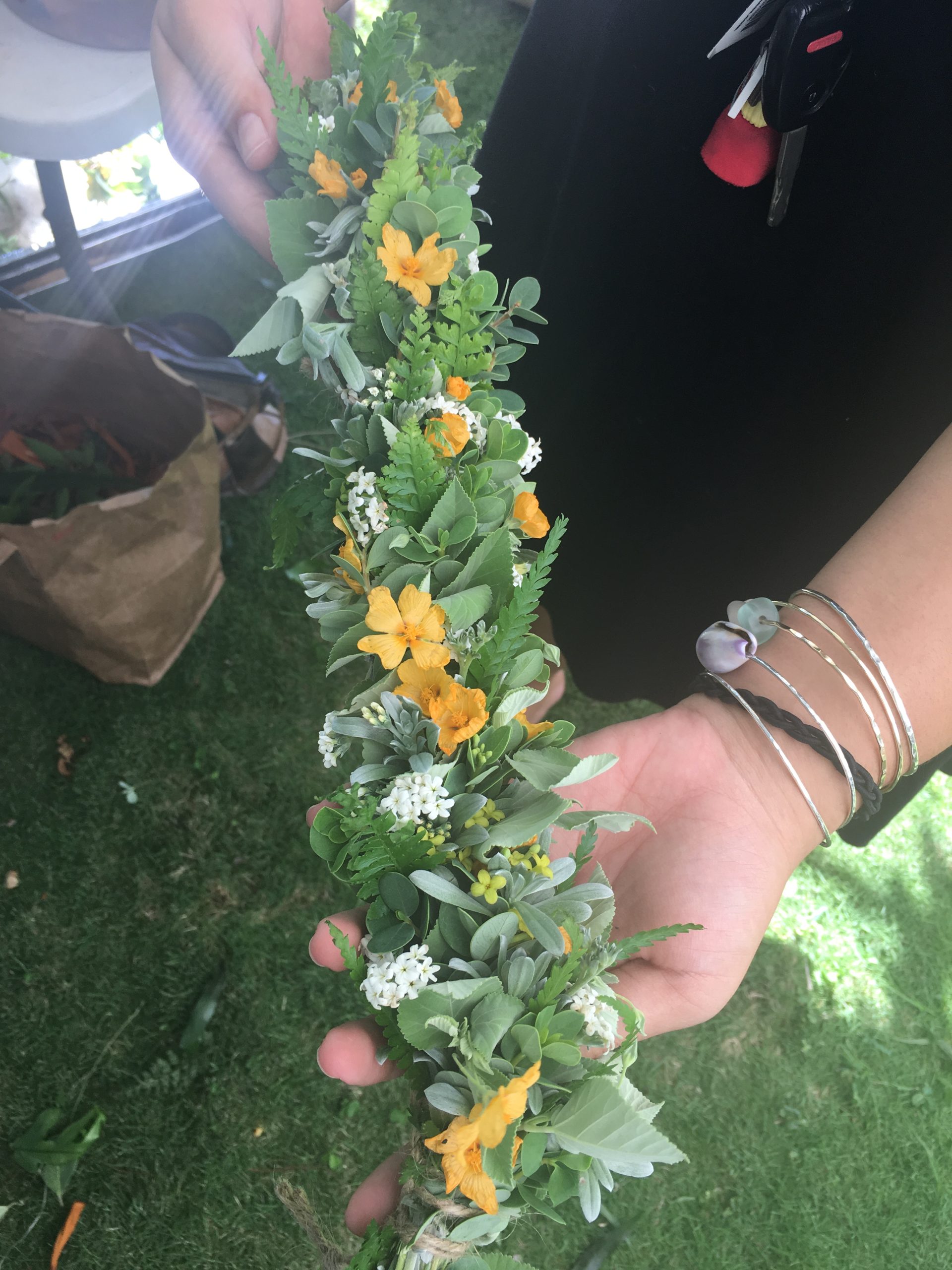
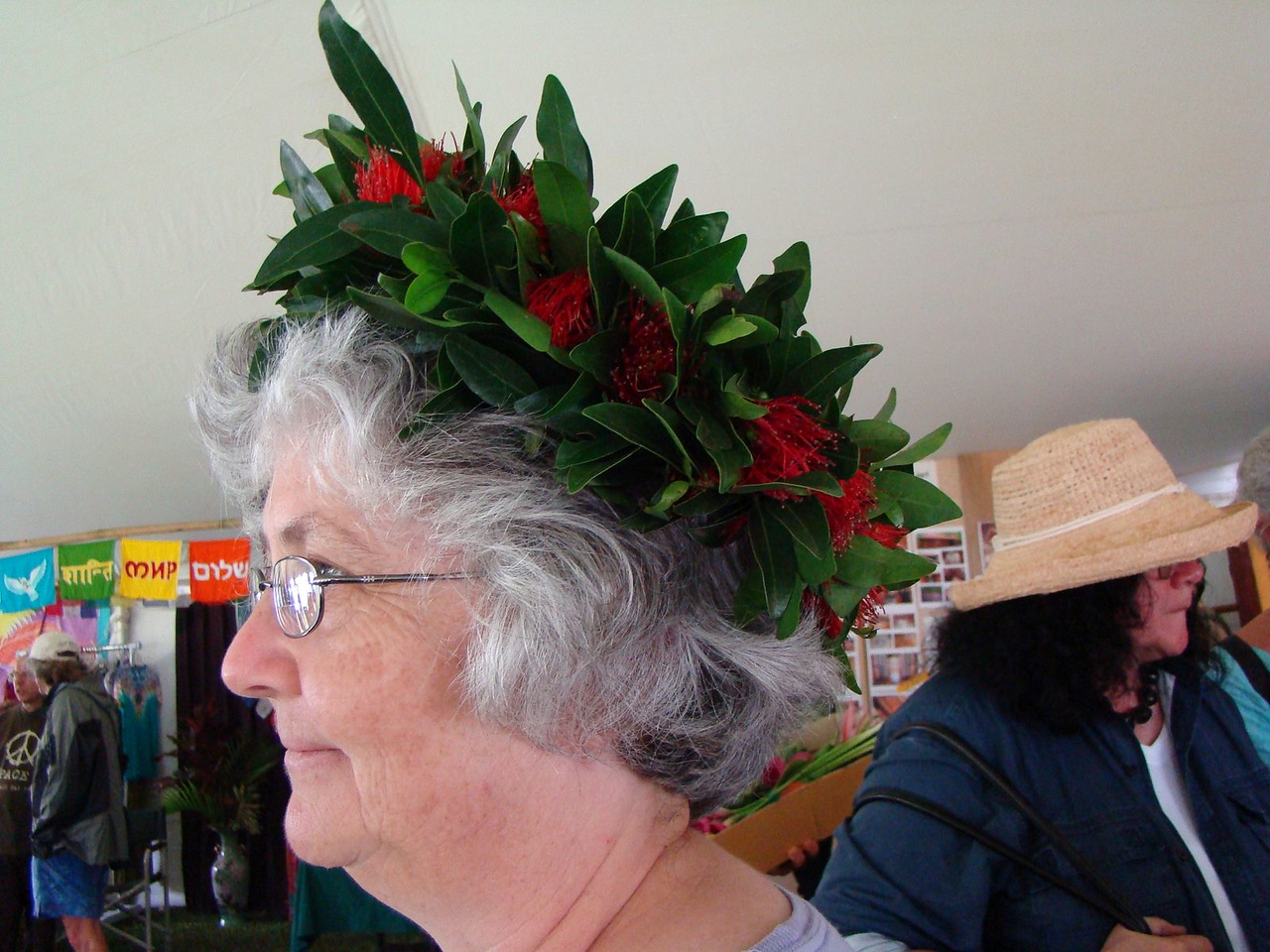
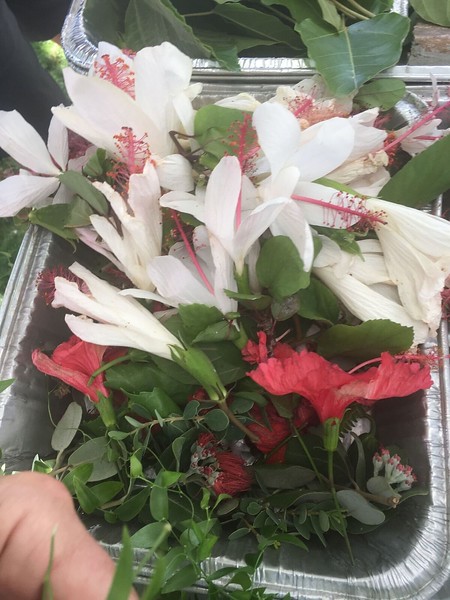
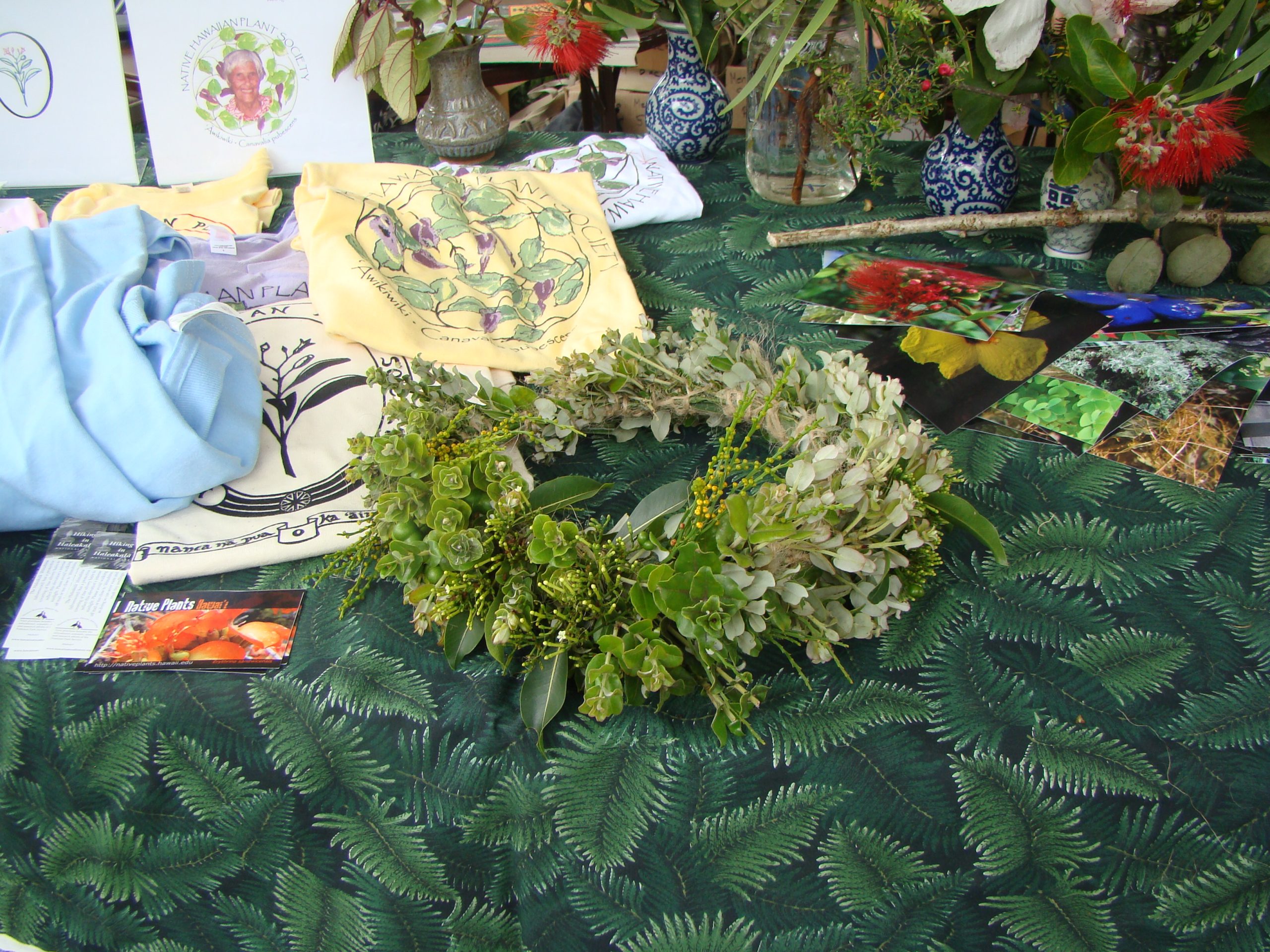
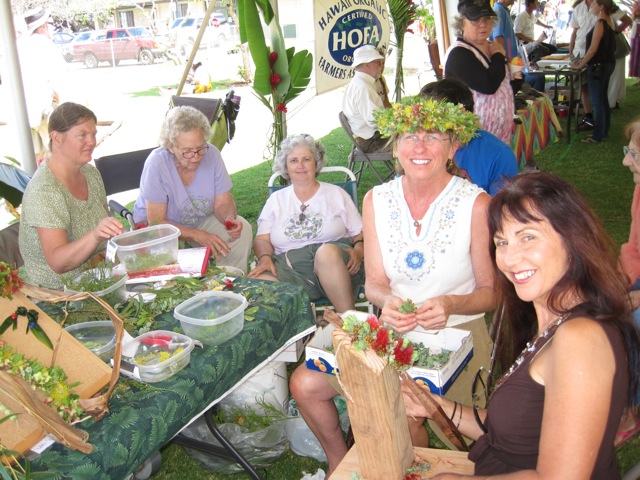
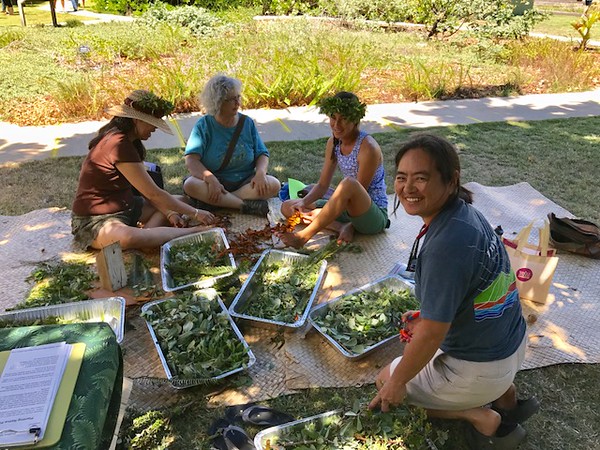
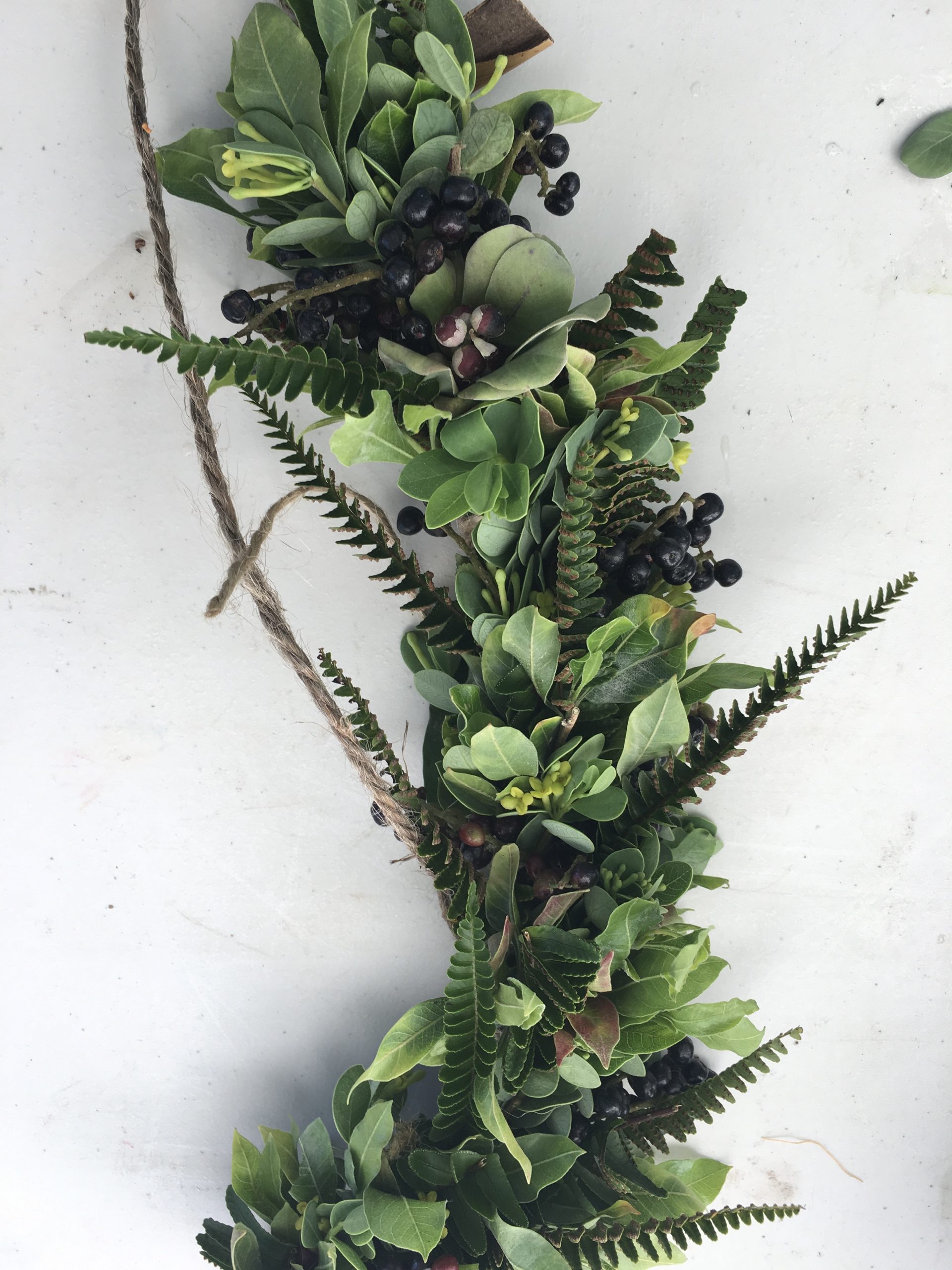
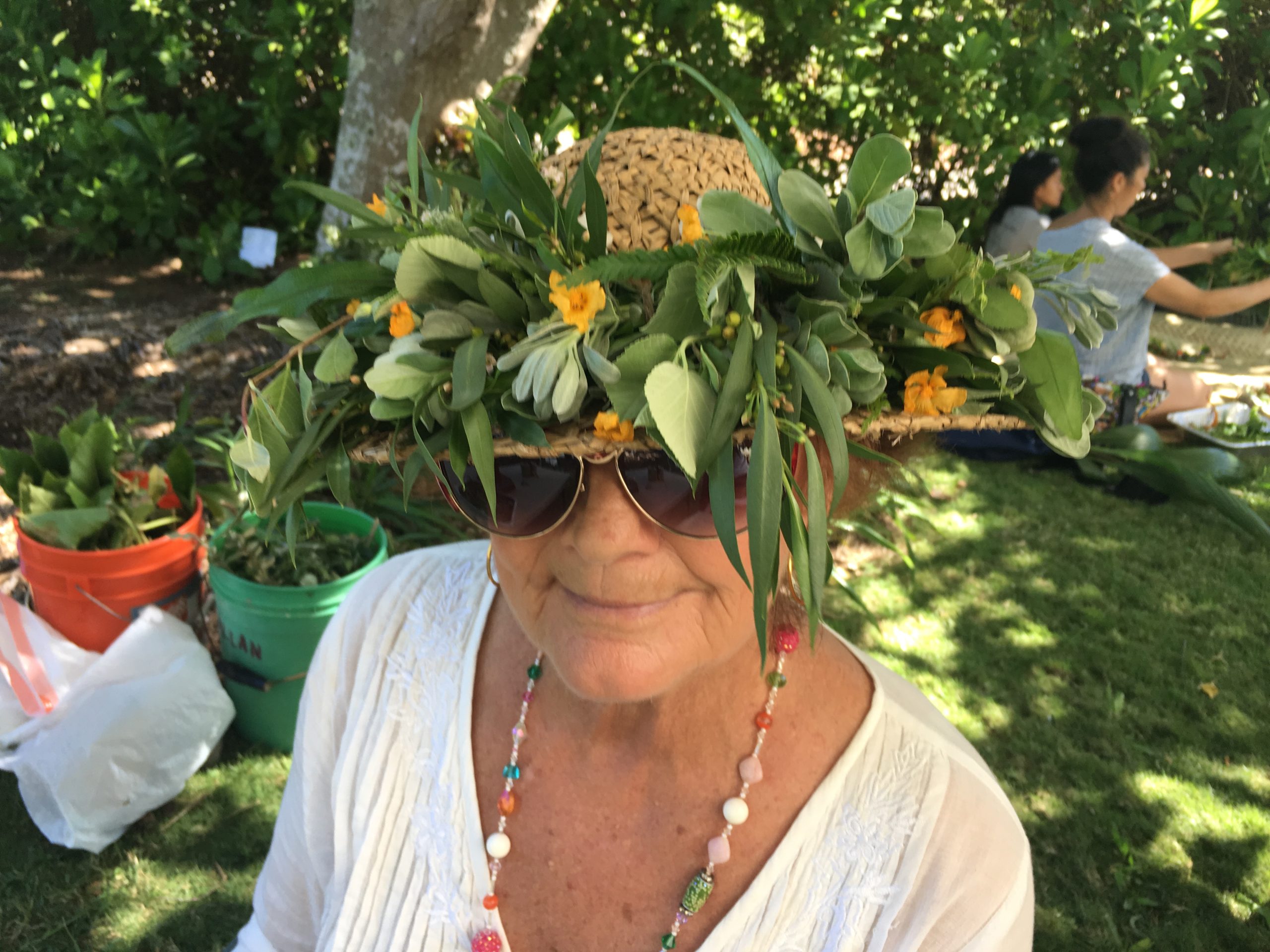
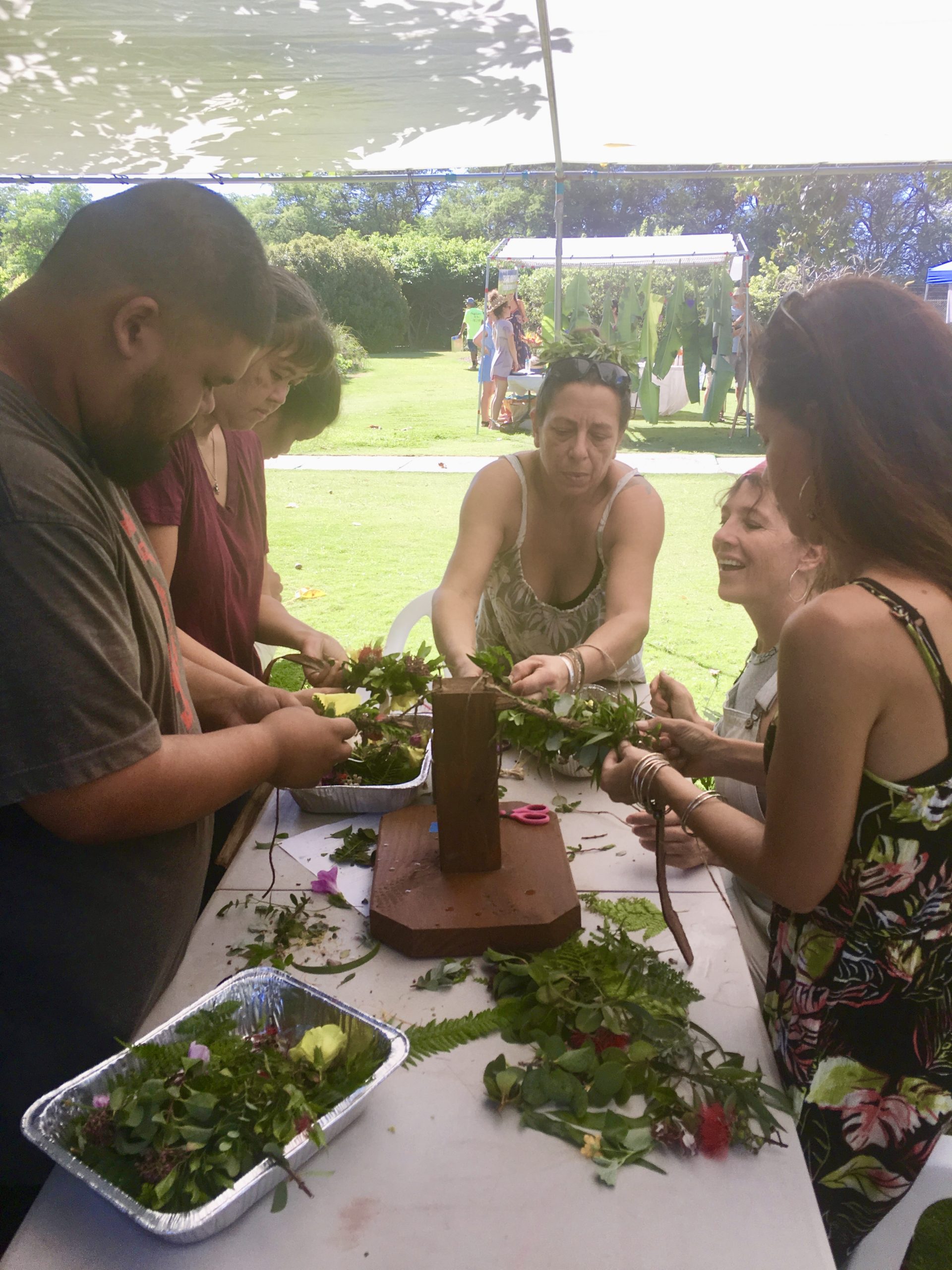
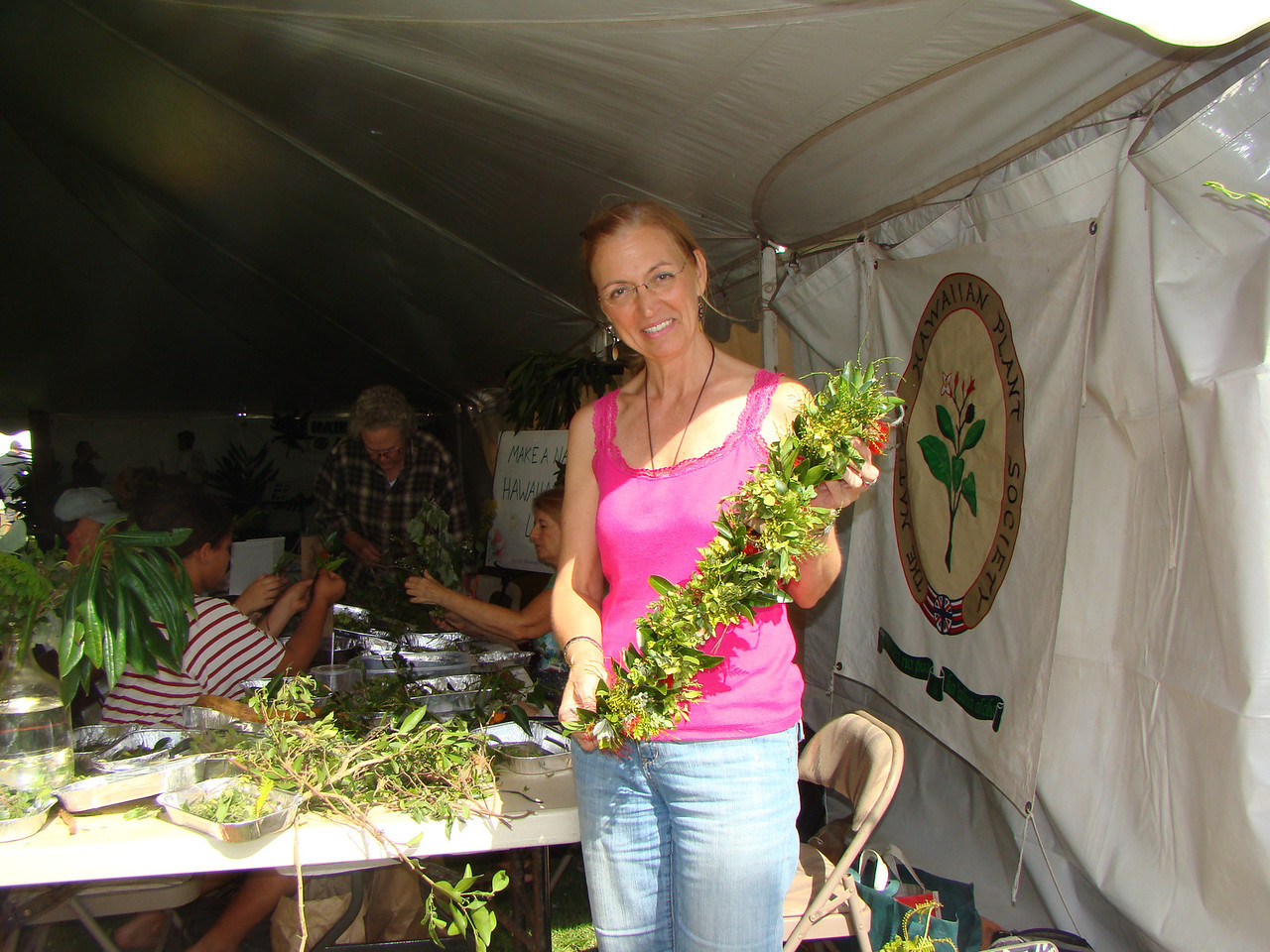
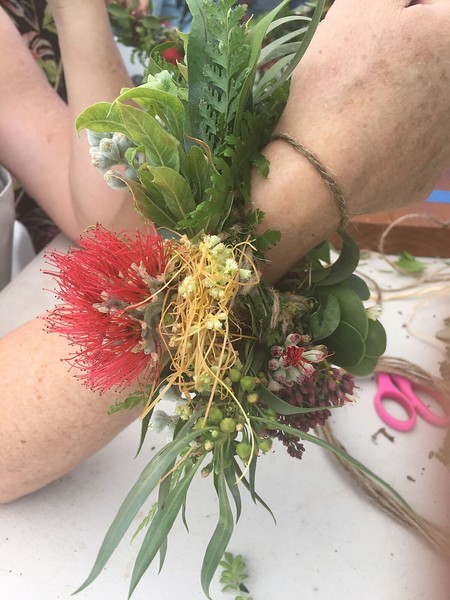
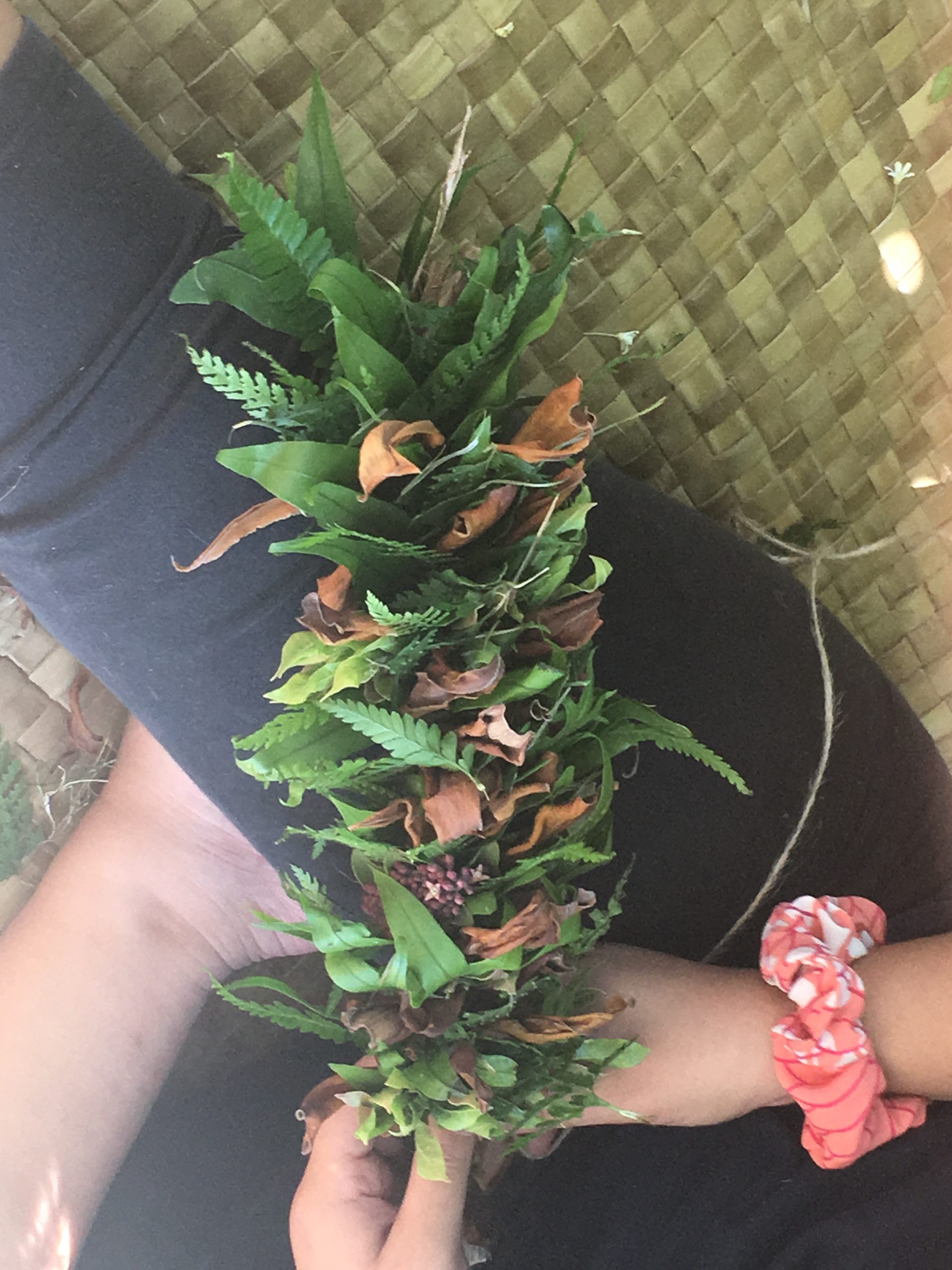
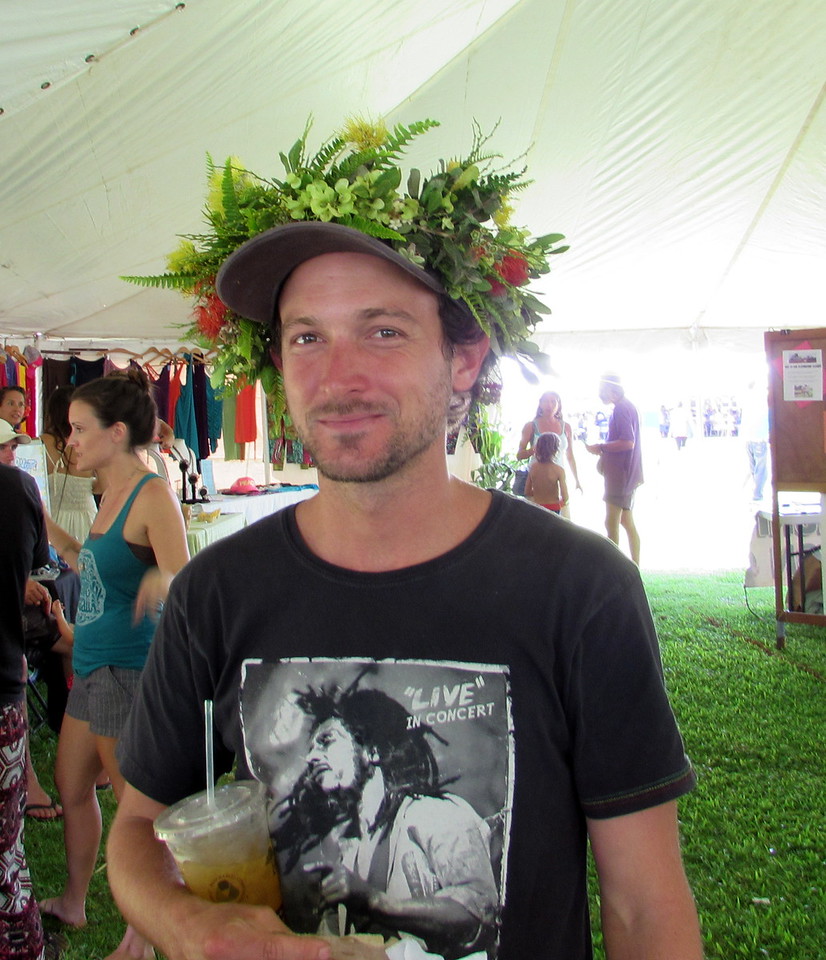
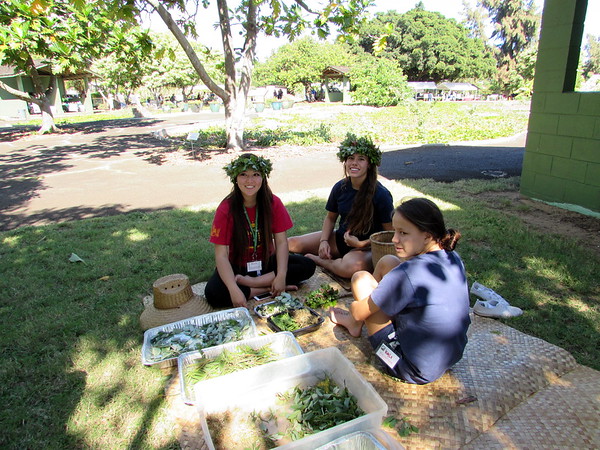
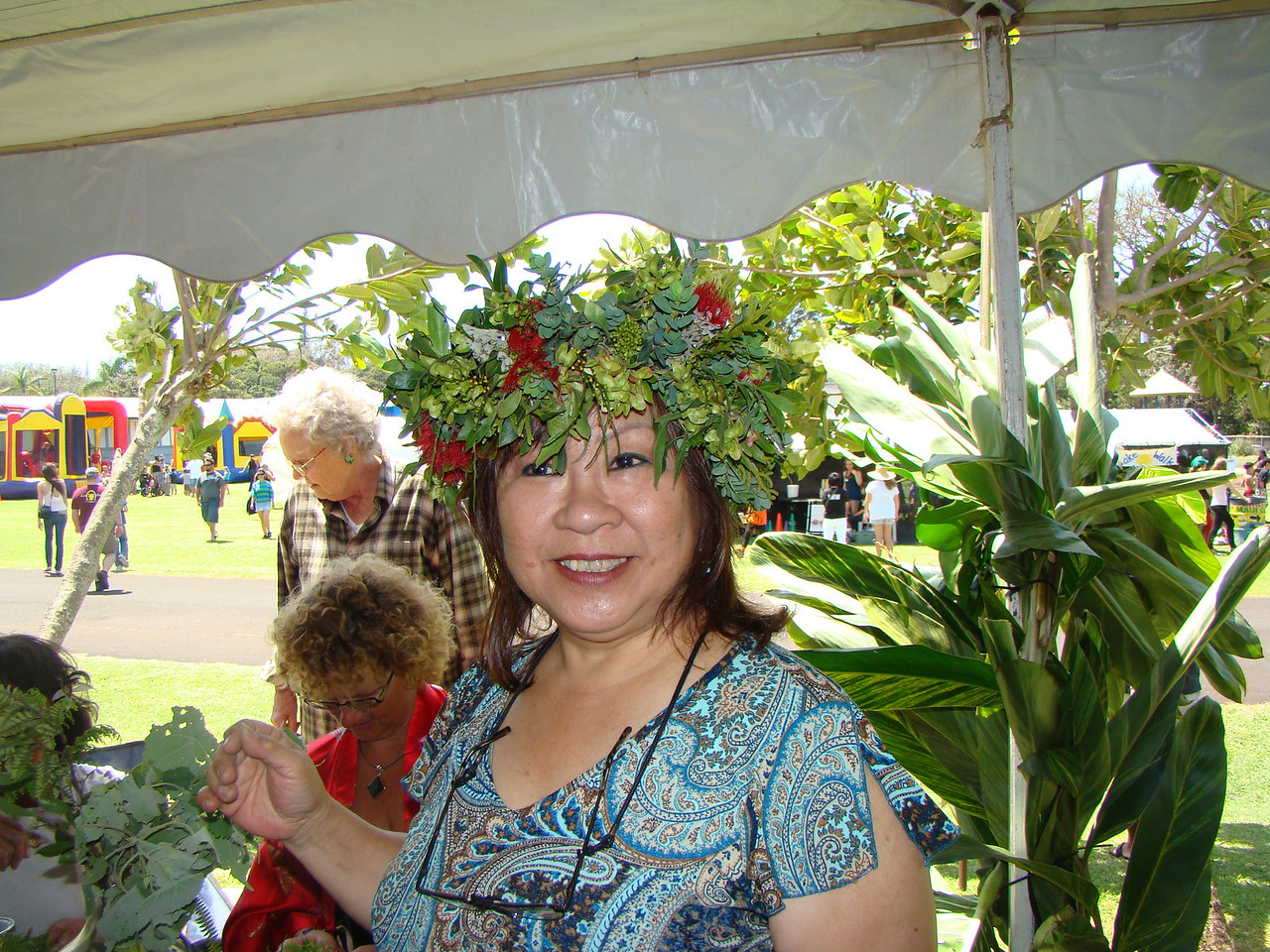
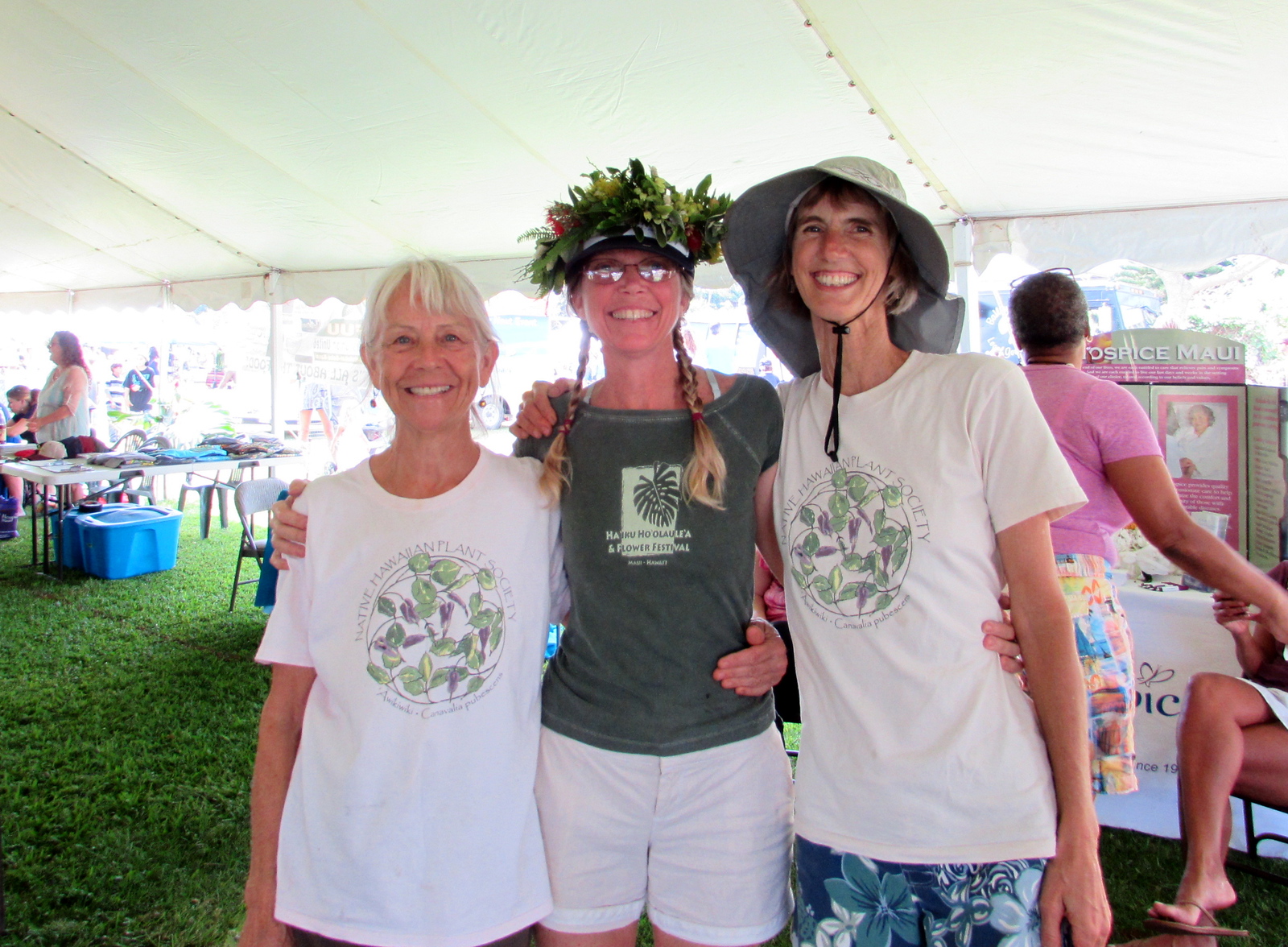
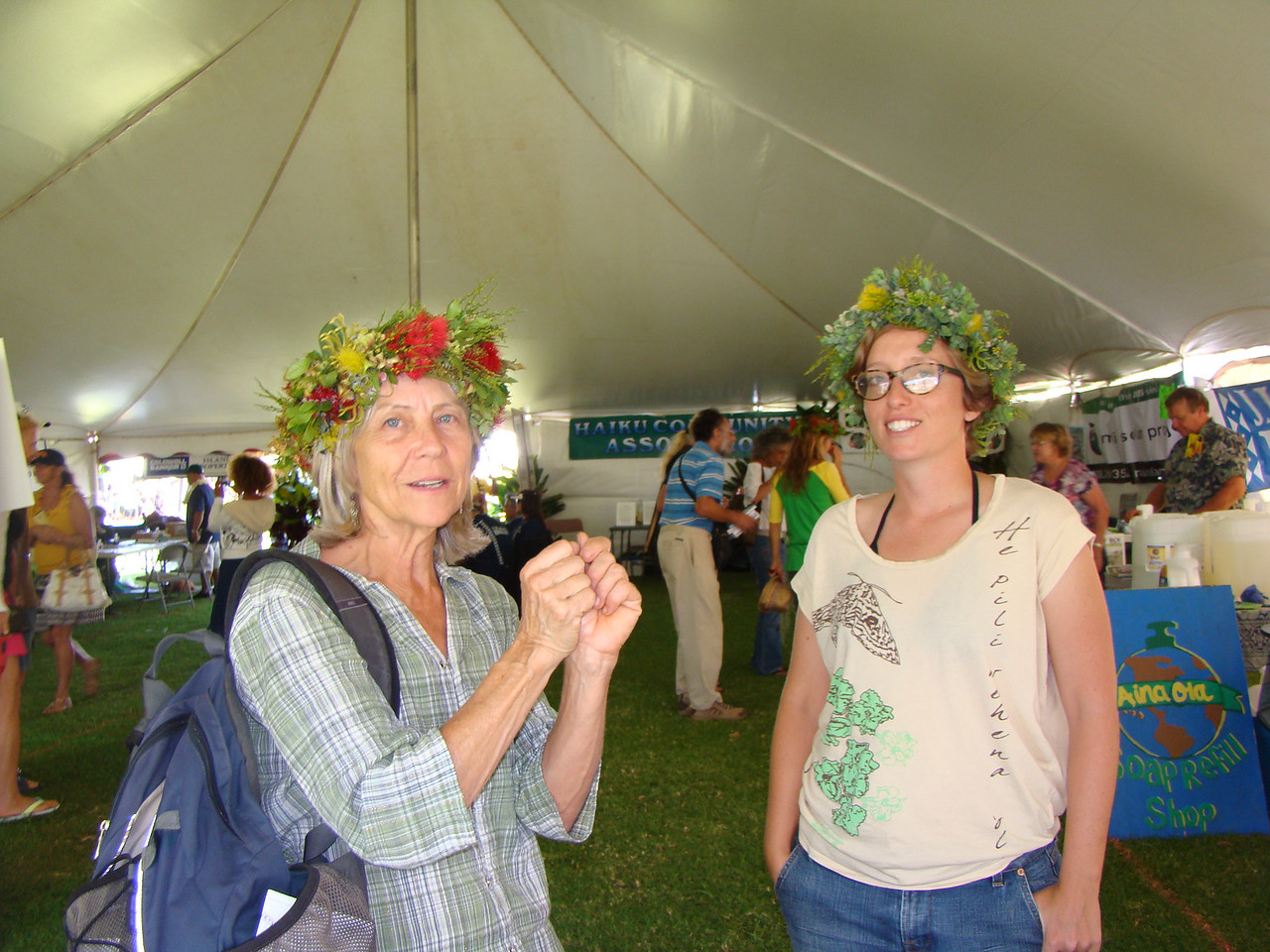
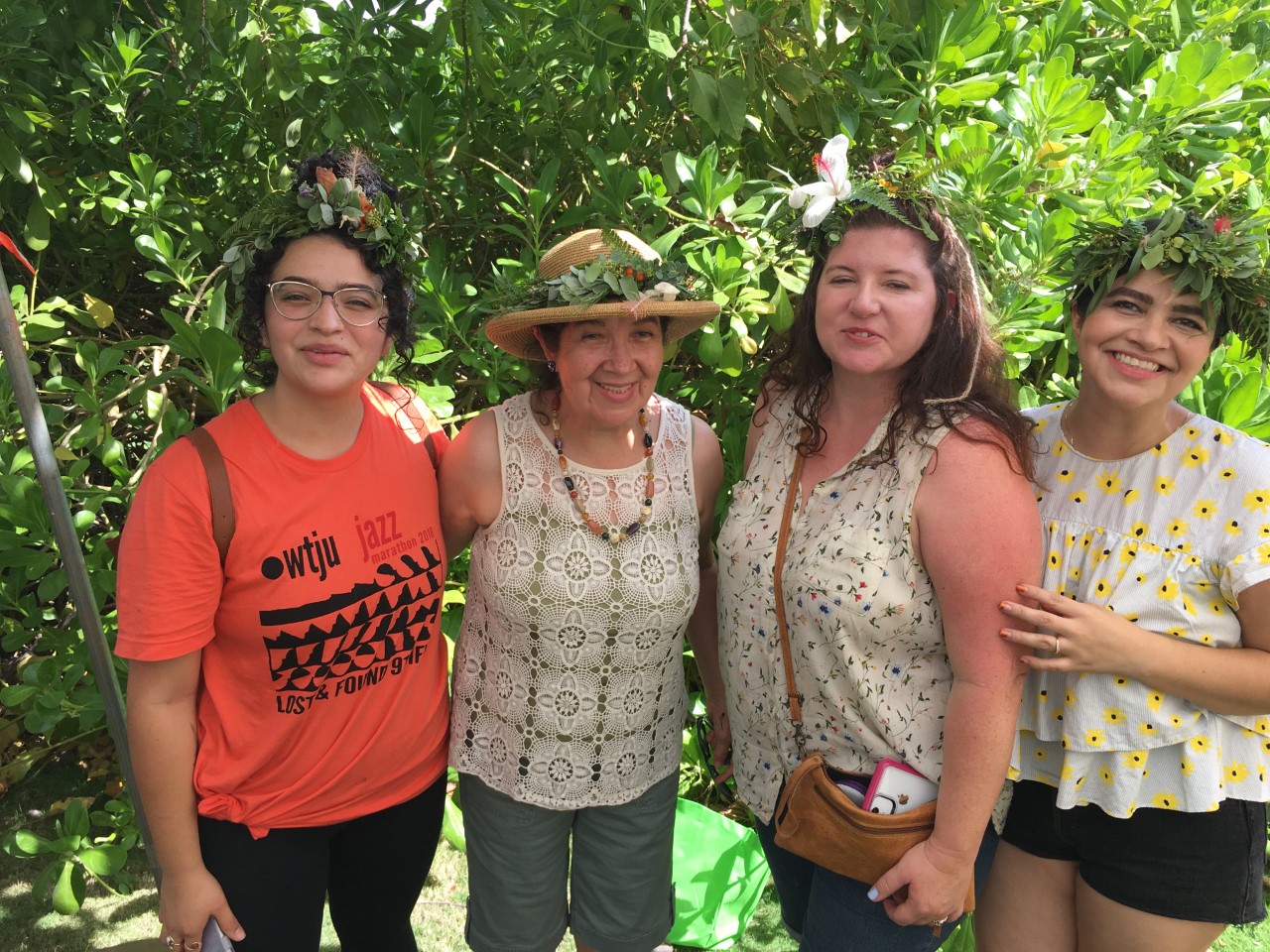
One of the ways NHPS helps our community connect with Hawaiʻi’s unique plant heritage is through the art of haku lei making. At several events across Maui, our members host traditional lei-making stations where visitors can learn, create, and discover the deep cultural and ecological importance of native plants. Lei Haku is a braiding technique where flowers and foliage are woven directly into a base, creating a full, lush garland. While there are other traditional methods of lei construction—such as Lei Hili (plaited), Lei Humupapa (sewn to a backing), and Lei Wili (winding)—NHPS focuses on sharing the Lei Haku style so participants can experience this intricate and expressive form of lei-making firsthand.
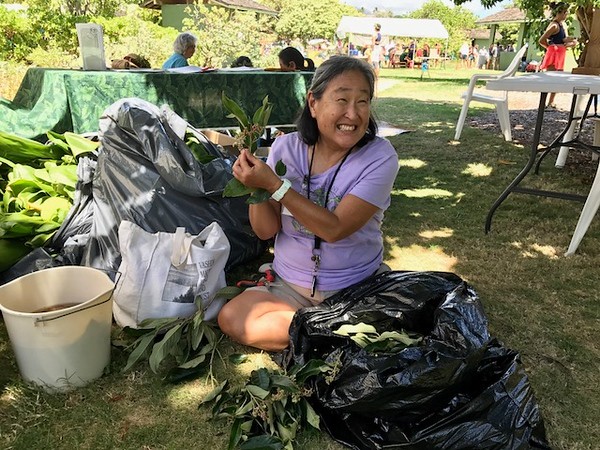
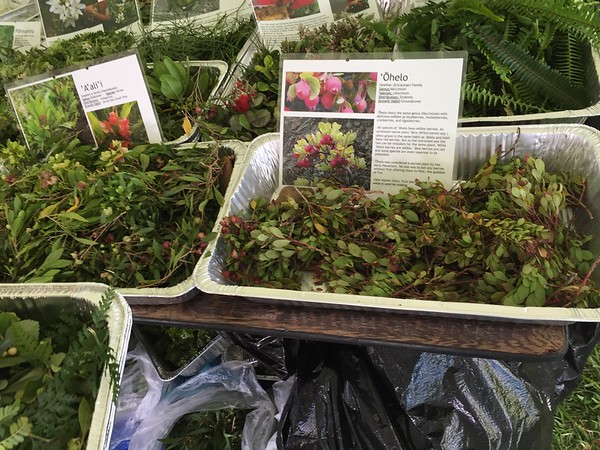
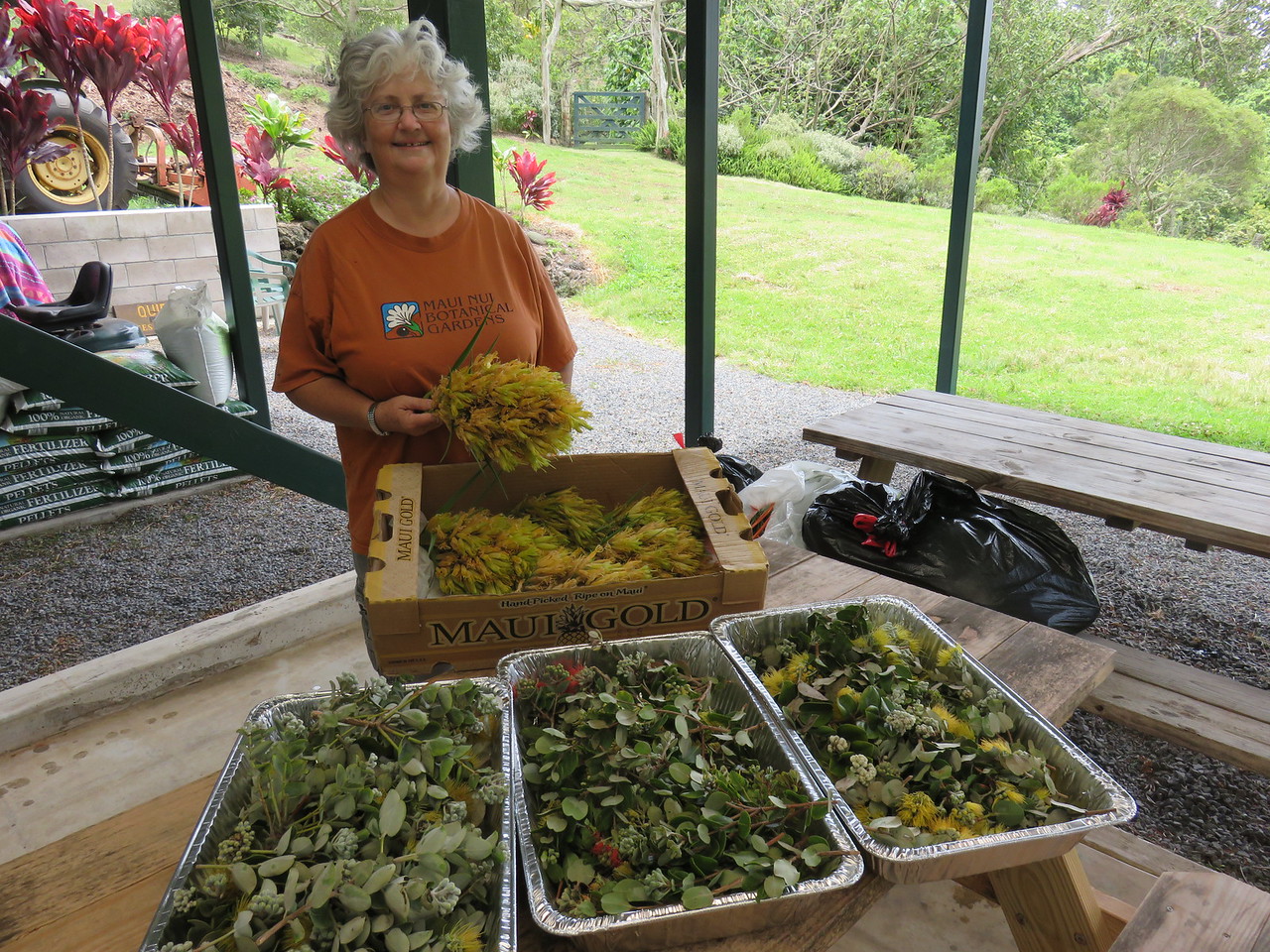
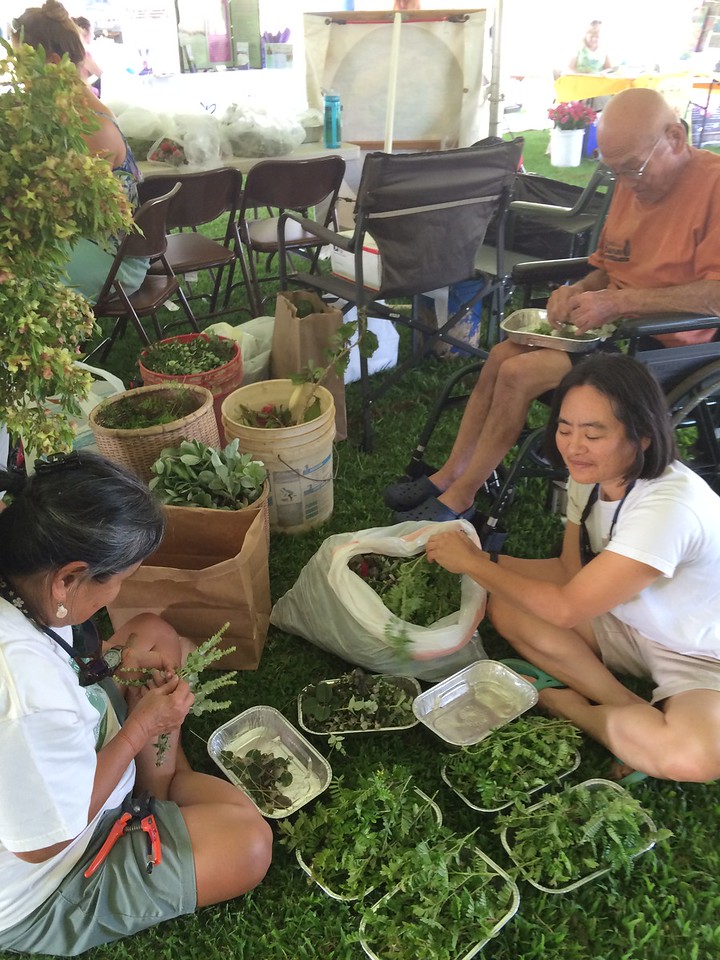
Most of the plant materials are gathered by NHPS members just a day or two before each event, ensuring freshness and allowing us to share the stories of each species. While participants weave their lei, we offer educational insights about the plants—how they’ve been traditionally used in Hawaiian culture, their role in protecting our watersheds, and their place in our native ecosystems
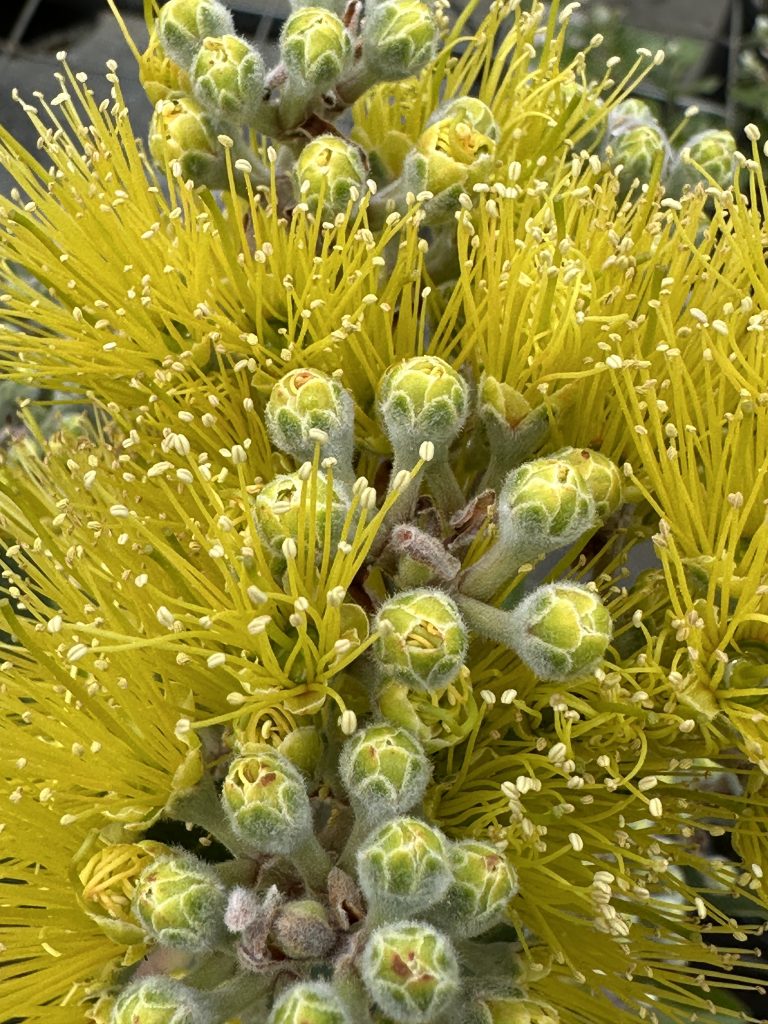
In the past, we often included ʻōhiʻa lehua in our leis. ʻŌhiʻa is one of Hawaiʻi’s most culturally and ecologically important trees, providing nectar for native birds, stabilizing watersheds, and holding a sacred place in Hawaiian tradition. Unfortunately, ʻōhiʻa is now under threat from Rapid ʻŌhiʻa Death (ROD)—a fungal disease caused by Ceratocystisspecies that spreads quickly through wounds in the tree’s bark, blocking water flow and killing the tree, often within weeks.
The disease can be spread by spores carried on tools, shoes, clothing, or plant material. Even careful harvesting can create small wounds making it easier for the fungus to enter. Leaving blossoms on the tree allows them to keep feeding native pollinators and avoids injury that could make the tree vulnerable. For these reasons, NHPS no longer uses ʻōhiʻa in lei-making, instead highlighting other beautiful native plants that honor Hawaiian traditions.
1. Do not move cut or prune ʻŌhiʻa: Keep ʻōhiʻa wood, flowers, lei, and plants on site, especially from areas known to have ROD. Wounds can serve as entry points for the fungus.
2. Clean gear and clothes: Before and after entering a forest, brush off all soil from your shoes and tools and spray with 70% rubbing alcohol or a 10% bleach solution to kill the fungal spores. Wash clothes in hot, soapy water.
3. Report suspected ROD: If you notice an ʻōhiʻa tree with leaves that have rapidly turned brown, report to Maui Invasive Species Committee (MISC) by calling 808-573-MISC.